
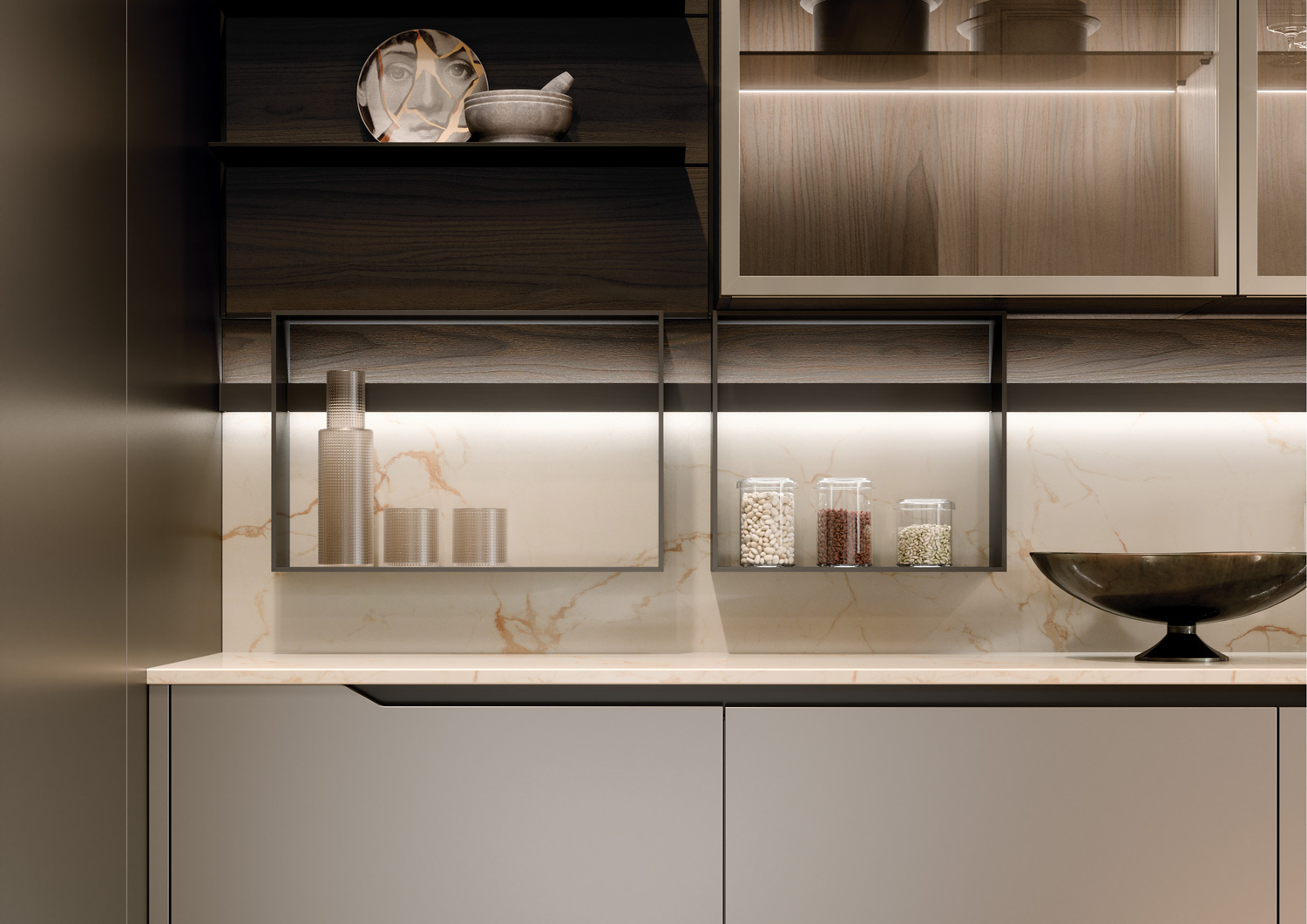
Kitchen tiles: a design choice that is here to stay
In today’s kitchens, tiles have once again become a defining element of contemporary interior design. Their return represents a modern reinterpretation of a timeless tradition, now revisited through innovation and meticulous attention to detail. Decorating a kitchen with tiles means expressing your identity through a distinctive and refined design project, capable of making every space truly personal.
This renewed appreciation is not driven solely by nostalgia for traditional interiors, but by the remarkable versatility of a material that adapts effortlessly to the design requirements and lifestyles of contemporary living.
In this article, we will explore the main aesthetic characteristics of kitchen tiles and discover how they can transform your kitchen into an elegant space that genuinely reflects your personality.
Table of contents
Appearance: shape, style and colour
Kitchen tiles combine practicality, durability and outstanding aesthetic versatility. Their appearance can be completely personalised, ranging from classic rectangular and square formats to hexagonal or arabesque designs that are ideal for more sophisticated interiors. The choice of tiles can therefore reinforce specific interior styles, becoming the distinctive feature that immediately captures attention and defines the identity of the space.
A monochromatic tiled surface creates a harmonious and orderly environment while remaining visually captivating. The three-dimensional texture created by each individual tile interrupts the static appearance of the composition, introducing a coloured surface with strong visual impact. For example, incorporating a band of white tiles into a minimalist kitchen with neutral tones enhances the perception of brightness and cleanliness while adding a tactile element that introduces an additional layer of depth.
In contrast, within Victorian or Mid-Century interiors, tiles featuring rich colours, varied shades or decorative cement-effect patterns emphasise the room's personality, clearly expressing the identity and taste of those who have chosen them.
Layout and dimensions
The arrangement of tiles has a significant influence on the perception of space. Contemporary kitchens can accommodate both horizontal layouts, which help create a greater sense of width and depth, and vertical layouts, which visually increase the perceived height of the ceiling.
Tile size also plays a fundamental role. Large-format tiles create visual continuity and amplify the perception of spaciousness, whereas smaller tiles introduce more intricate details and visual rhythm, highlighting specific decorative patterns.
As for height, the most common solution is to tile the backsplash area up to the height of the wall units or, where no wall units are present, extend the tiled surface all the way to the ceiling. This approach not only protects the wall but also enhances the overall aesthetic of the kitchen, achieving a harmonious balance between form and functionality.
Tiles as a backsplash
Applying tiles in a horizontal band exclusively behind the cooking area—or extending them to include the sink area—introduces a refined and visually engaging feature that naturally guides the eye across the composition. In addition to protecting the wall behind the worktop, a tiled backsplash adds character to the kitchen, particularly in linear layouts, enhancing the backsplash with a solution that is both contemporary and practical.
The most common height generally ranges from 30 to 60 centimetres, providing sufficient protection against the demands of everyday food preparation. However, this choice largely depends on the overall interior design project. Tiles may extend upward until they meet existing architectural elements, such as wall units or shelves, or continue uninterrupted to the ceiling. Regardless of the chosen solution, the kitchen design should always be carefully considered, reflecting the personality and lifestyle of those who experience the space every day.
Tiles as a decorative feature
Deciding where to install tiles within the kitchen is a design choice that deserves careful consideration. Cladding an entire wall, the backsplash, the wall above the worktop, or even the area behind a peninsula are all solutions capable of creating a powerful visual statement.
Covering an entire wall with tiles is a bold stylistic decision that can dramatically transform the room. In more compact kitchens, a fully tiled wall creates an elegant architectural backdrop with a striking visual impact. In larger spaces or open-plan environments, however, the greater design freedom allows for highly expressive compositions that become genuine focal points within the interior.
In the alternative, tiles can be applied to a dividing half-wall or to the base of an island or peninsula. In this case, the cladding is generally limited to the height of the worktop or extends only slightly beyond it, typically between 80 and 110 centimetres. This decorative solution introduces originality and visual depth, particularly when it echoes another tiled surface already featured elsewhere in the kitchen, creating a refined sense of continuity throughout the space.
Finally, using tiles as a flooring material represents an even stronger design statement than limiting them to vertical surfaces alone. Today, there is an extensive variety of options available, ranging from natural textures that faithfully reproduce the appearance of wood or stone, to clean and contemporary minimalist finishes, as well as more traditional aesthetics such as terracotta or Spanish-inspired decorative patterns. Each of these alternatives delivers a distinctive visual impact while creating continuity with the overall interior design.
Conclusion: a balance between aesthetics and personality
Today more than ever, tiles represent a design choice capable of transforming the kitchen into a space of personal expression and refined aesthetics. Their remarkable versatility allows them to adapt to different styles, layouts and applications, consistently delivering authentic and distinctive results.
What truly makes this solution unique is its ability to combine contemporary design with timeless tradition in a harmonious and balanced way. Every kitchen becomes a unique environment, capable of expressing the personality and taste of those who live in it, while never compromising the everyday comfort and functionality that are essential for enjoying the space to its fullest.
If you are considering designing your kitchen with tiled surfaces and wish to create a space that genuinely reflects your aspirations and the way you live, book an appointment at a Berloni Atelier. Our designers will guide you through a personalised design journey to create a kitchen that is truly your own.
Explore the Berloni Catalogue and find out how to create your kitchen.

