

How to choose kitchen colours: from walls to cabinet doors
Colour defines the atmosphere of a space, alters the perception of surfaces and creates emotional connections that make the kitchen deeply personal. Choosing the right colours involves a series of considered decisions that take into account the architectural characteristics of the space, the natural light available and everyday habits.
In this article, we will explore how to coordinate colour choices across every element of the kitchen, creating a tangible expression of personal identity while enhancing the everyday experience.
Table of contents
Which surfaces to consider
Planning a kitchen colour scheme requires an overall vision that encompasses every kitchen surface, from cabinet doors and worktops to walls and flooring. Understanding the relationship between these elements makes it possible to create balanced compositions in which no single area dominates unpleasantly, but every component contributes to the overall harmony of the living space.
- Cabinet doors and fronts, together with the worktop and backsplash, are the dominant visual elements. They establish the primary character of the space and provide the foundation for all subsequent colour choices.
- Walls and appliances enhance the interior through their relationship with the kitchen cabinetry. These elements contribute significantly to the overall balance of the composition, and their colours should therefore be considered as part of the complete design scheme.
- Flooring and ceilings frame the space: the former establishes the foundation on which the entire project rests, while the latter can enhance or soften the overall brightness of the room.
A single-colour scheme
The strength of using a single colour lies in its ability to amplify the architectural qualities of the space, enhancing the lines of the design and visually connecting its different elements. This approach creates elegant interiors with a strong visual impact, although it requires precise design consistency to prevent the composition from becoming monotonous or visually confusing.
The choice of the dominant colour completely determines the atmosphere: whites enhance brightness and convey a sense of cleanliness; greys and beiges create an impression of refinement and neutrality; while bolder shades such as black, blue and the many hues across the colour spectrum express a stronger, more distinctive identity, bringing the personality of those who choose them to the forefront.
Multicolour design: two, three or multiple colours
A multicolour approach offers virtually limitless opportunities for personalisation, but requires careful consideration when combining different shades to prevent visual confusion.
A two-colour scheme represents a more balanced solution. On the one hand, two highly distinctive colours can be combined to define a space that immediately captures attention; on the other, a neutral base paired with a distinctive shade can create a sense of depth that breaks up visual monotony and introduces unexpected details.
A three-colour composition introduces an additional element. This configuration requires careful attention to proportions: a dominant colour is used across larger surfaces, a secondary shade defines medium-sized areas, while a third colour introduces distinctive accents.
The 60-30-10 rule
When considering the visual weight of different colours within the kitchen, the 60-30-10 rule helps establish harmony between the shades selected for the interior. Adapted to the individual context, this design principle makes it possible to introduce multiple colours without compromising the overall balance, generating visual interest through contrasts that never become excessive.
- Sixty per cent is assigned to the dominant colour, which defines the overall atmosphere and creates continuity between the different areas of the kitchen.
- Thirty per cent is dedicated to the secondary colour, often used for medium-sized components or recurring decorative elements.
- The remaining ten per cent is reserved for one or more accent colours, introduced through details such as handles, furnishing accessories or small appliances.
Combining colour and lighting
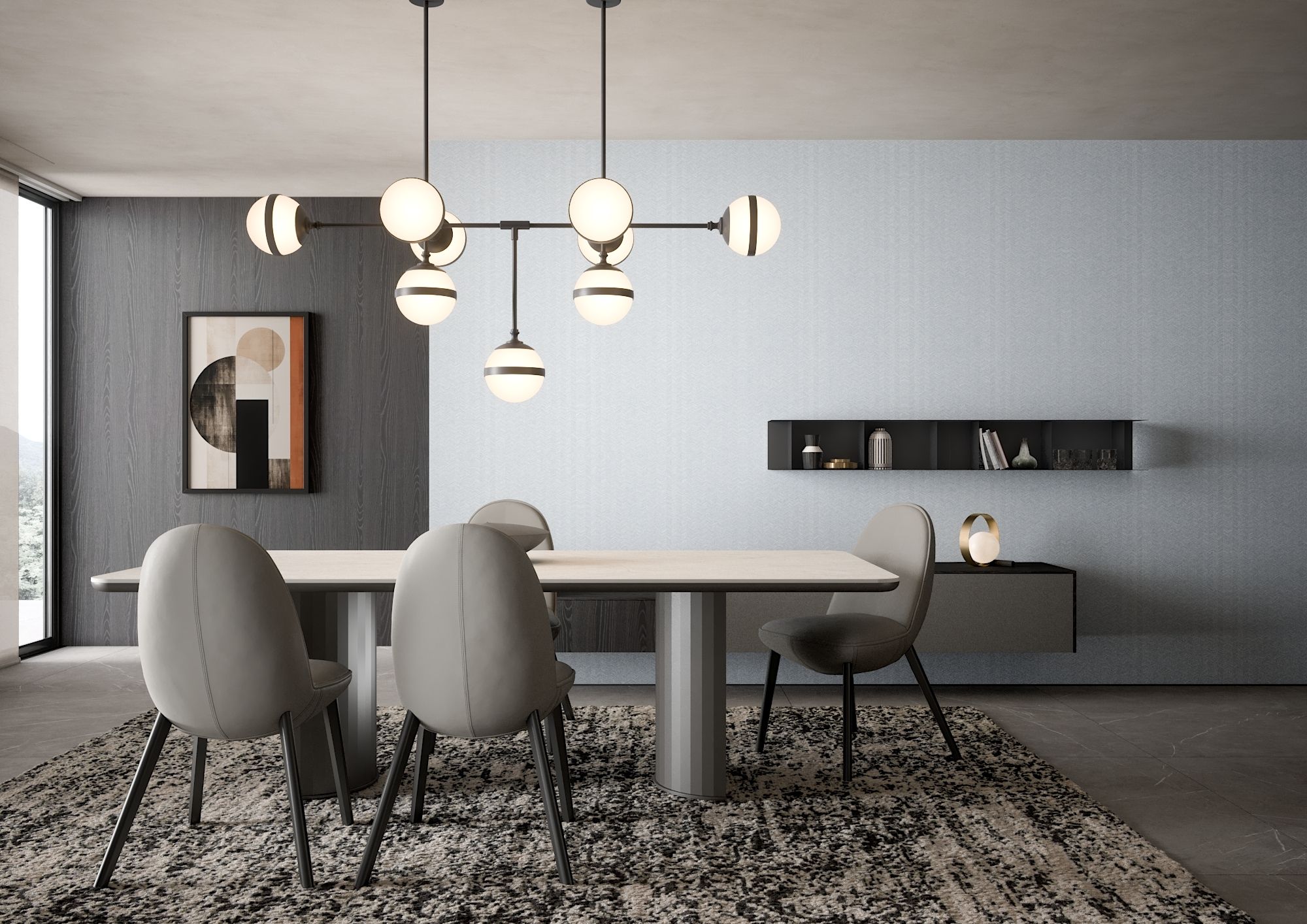
Lighting contributes significantly to the way colours are perceived in the kitchen, influencing both the atmosphere and the functionality of the space throughout the different hours of the day. Furthermore, a considered approach to lighting enhances the experience of the kitchen, facilitating food preparation while creating an inviting setting for convivial moments.
Lighting design should consider how each type of light interacts with coloured surfaces: glossy materials reflect and amplify brightness, while matt finishes absorb light, creating more intimate atmospheres. Understanding these dynamics makes it possible to optimise the desired chromatic effect and create interiors that retain their beauty under any lighting conditions.
Common colour combinations
Choosing colours for the kitchen represents far more than an aesthetic preference: it is an authentic expression of lifestyle and of the personality of those who inhabit the space. Every surface interacts harmoniously with the others, evoking sensations that profoundly influence everyday experiences and the moments associated with preparing and enjoying food.
White kitchen
An all-white kitchen is characteristic of modern design, creating bright interiors in which essential forms highlight the qualities of the materials. This choice requires particular attention to textures and finishes to avoid monotony: glossy, matt, textured and lacquered surfaces reveal their individual character through the interplay of light and shadow.
Soft colours
Neutral shades such as beige and grey offer enduring versatility and refinement, establishing a solid foundation that can be complemented by coloured accents. These tones work harmoniously both with natural materials for a more understated aesthetic and with walls and cabinet fronts in bolder shades for a more colourful composition.
Bright colours
Compositions featuring vibrant colours paired with neutral walls introduce energy and character into the kitchen, establishing a connection with nature and conveying a sense of freshness and vitality that enhances the everyday experience of the space. For even more expressive projects, the entire room can become a palette of colours which, when carefully considered and balanced, reflects a lively and creative personality.
Wooden cabinetry
Wooden cabinetry, combined with virtually any colour, represents an alternative that naturally introduces warmth and vibrancy into the kitchen. From pure white to delicate pink, from energetic orange to sage green, each combination makes it possible to balance the authentic character of wood with the freshness of vivid shades.
Black and white
Black and white is the ultimate contrast, where elegance emerges from the tension between opposites. This combination requires careful balance in its proportions, creating spaces with a powerful visual impact that can be softened through the introduction of natural materials, reducing the severity of the sharp contrast.

Conclusion
In the modern kitchen, choosing colour is a journey of personalisation that reflects individual identity while tangibly enhancing the experience of everyday living. A balance between emotion and aesthetics can be achieved through considered choices that take into account the interaction between every surface, natural and artificial lighting, and the daily habits of those who inhabit the space.
The extensive personalisation possibilities offered by Berloni kitchens make it possible to create a unique project that fully expresses individual personality. Through an authentic and personal dialogue, we create spaces tailored to your needs and aspirations. Book an appointment at a Berloni Atelier , where our designers will be delighted to work with you to create a space that fully reflects your vision.
Explore the Berloni Catalogue and find out how to create your kitchen.

