
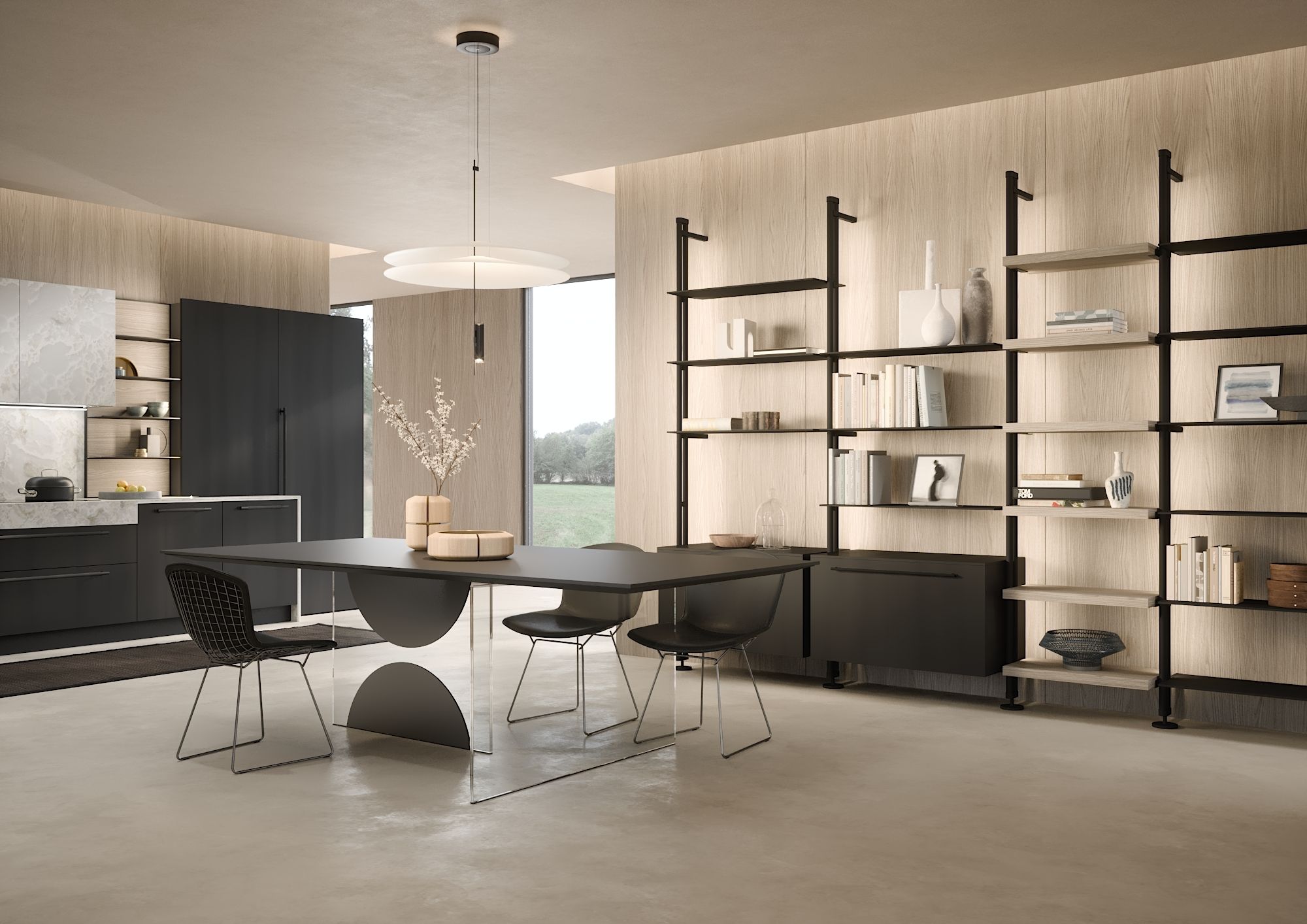
How to decorate kitchen walls
Kitchen walls are surfaces to be enhanced through carefully considered design choices that strike a balance between functionality and aesthetics. Making the most of these spaces therefore means integrating practical requirements with personal taste, creating a unique environment that responds perfectly to everyday needs.
In this article, we will explore how to decorate the wall—or walls—that do not accommodate the main kitchen structure, in order to define not only the final appearance of the room, but also its overall livability.
Table of contents
Wall finishes: paint, wallpaper and tiles
The most immediate way to personalise the design of a wall is to cover its surface with a decorative finish. Painting the walls is a timeless choice with considerable visual impact. Nevertheless, selecting the right kitchen colour palette is essential in order to create a space that is both distinctive and aesthetically refined.
Wallpaper is an alternative that conveys a bolder personality. Today, it is also available in moisture-resistant materials, making it possible to introduce sophisticated patterns capable of transforming the kitchen into a vibrant and inspiring environment.
Beyond more traditional wall finishes, an interior design project can also incorporate more distinctive decorative solutions, such as mirrored walls or decorative wall panelling, both of which enhance brightness and visual depth in spaces of every size. Likewise, a contemporary interpretation of ceramic tiles represents an interesting option, creating striking visual effects that add a timeless and elegant touch to the walls.
Tall units with built-in functions
Fitting out an entire kitchen wall with storage units is a contemporary solution that responds to the desire to combine design and functionality within a single architectural element. This configuration consists of a composition of tall, vertically arranged units characterised by clean, linear proportions. These equipped kitchen columns are internally organised with shelves, drawers, hooks, and sliding rails, allowing everyday utensils and accessories to be stored with elegance and efficiency.
Furthermore, equipped tall units can incorporate integrated lighting, enhancing the depth of the cabinetry while creating a sophisticated atmosphere that makes appliances, utensils, accessories and food items easier to access.
Decorative elements and wall accessories
An empty wall is like a blank canvas upon which to express your personality and individual style through carefully selected decorative objects. Paintings, art prints and framed photographs immediately add warmth and uniqueness to the room, creating a welcoming and highly personal atmosphere.
Similarly, decorative plates and handcrafted ceramics introduce a tangible artistic dimension into the space. These objects enhance the vertical surfaces through the meticulous craftsmanship of artists and artisans, conveying elegance and familiarity in an original and refined way.
Personal taste becomes the focal point of the kitchen experience, while decorative accessories reveal the room's identity. Plants, clocks, and designer or vintage lighting fixtures provide the finishing touch of sophistication, demonstrating how even the smallest details can significantly transform the perception of the surrounding surfaces.
Storage solutions
An aesthetically refined solution consists of designing open storage elements integrated directly into the wall. A contemporary approach involves installing shelves and bookcases to display everyday objects in an orderly and elegant manner. Shelves also represent a modern alternative to traditional wall cabinets, bringing personality to the room while visually lightening the entire composition.
Conversely, when greater order and practicality are required, wall-mounted organisers or pegboards can be installed. These systems allow complete customisation of the wall by combining hooks, shelves and containers in configurations that can easily adapt to different lifestyles and aesthetic preferences.
Finally, an open pantry with exposed shelving not only improves accessibility to ingredients and kitchen utensils but also becomes a decorative feature in its own right, taking centre stage within the domestic environment.
Dedicated areas: breakfast corner and home bar
A section of the kitchen can be dedicated to specific functions, such as a breakfast corner or a home bar. Both solutions further define the living space, encouraging moments of relaxation and conviviality that enhance the quality of everyday life.
A well-organised breakfast area, complete with shelves, small appliances and storage containers, transforms the daily routine into an enjoyable ritual, making every morning more comfortable and inviting.
The home bar, on the other hand, becomes the social hub of the kitchen. Shelves and dedicated storage for bottles and glassware, combined with carefully designed lighting, create a welcoming setting that is ideal for entertaining family and guests.
Conclusion: balancing aesthetics and functionality
Decorating kitchen walls represents a significant stage in the overall design of the room. It is an expression of personal identity and of the way you wish to experience the space every day. Every decision contributes to enhancing the overall style—from artwork to shelving, from plants to dedicated areas—creating a kitchen that genuinely reflects the personality of those who live in it.
Choosing carefully how to make use of these surfaces means experiencing your kitchen as a place that is not only highly functional, but also emotionally engaging and rich in meaning. To create a project that truly feels your own, we invite you to book an appointment at a Berloni Atelier. Here, our designers will take the time to understand your real needs and transform your design aspirations into reality.
Explore the Berloni Catalogue and find out how to create your kitchen.

